Production Process Stages of Aluminum-Magnesium Dust in Automotive Polishing Workshops
Vehicle lightweighting is a crucial means for energy conservation and emission reduction in the automotive industry. The primary weight reduction effect of aluminum components can reach 30% to 40%, while secondary weight reduction can further increase this to 50%. For every 10% reduction in vehicle mass, fuel savings of up to 8% can be achieved. Additionally, for every 1 kg of aluminum used in a car, tailpipe emissions over its entire lifecycle can be reduced by 20 kg. Therefore, vehicle lightweighting will inevitably promote the widespread application of aluminum alloys in automotive bodies.
Aluminum alloys offer characteristics such as moderate strength, good corrosion resistance, excellent weldability, strong extrusion formability, and favorable oxidation and coloring properties. They are suitable for automotive components such as roof racks, body panels including the four doors and two hoods, radiators, and fuel tanks.
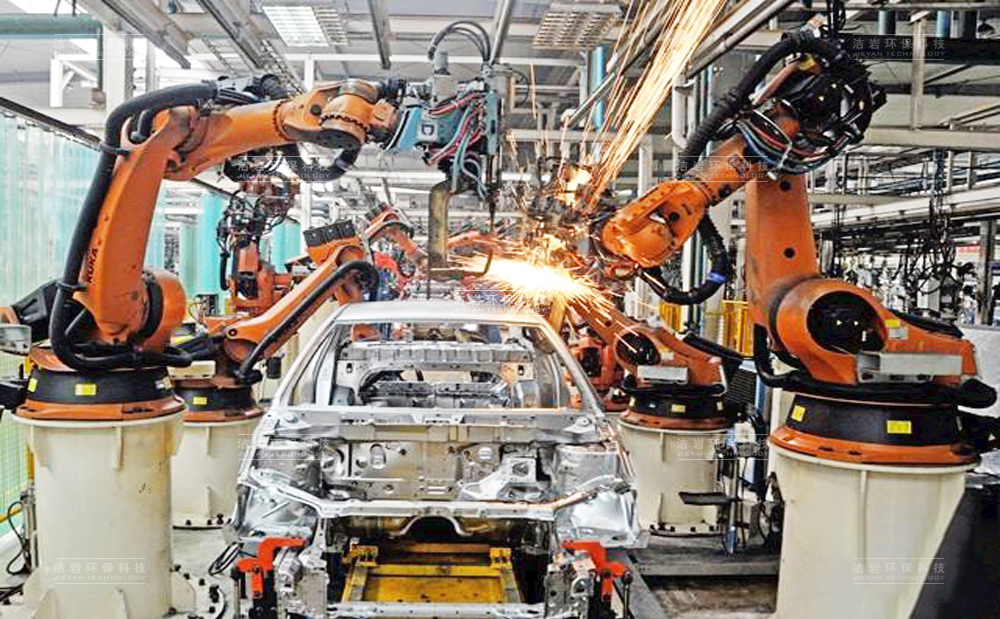
The main processes involved in welding and assembling aluminum alloy bodies include resistance welding, CMT cold metal transfer welding, tungsten inert gas (TIG) welding, riveting, stamping, and grinding/polishing. Throughout these processes, aluminum-magnesium dust can accumulate, posing explosion risks. Therefore, preventive measures and management for dust explosions are essential.
Characteristics and Hazards of Aluminum-Magnesium Alloy Dust
1. Aluminum alloy is a relatively reactive alloy. Under certain conditions, aluminum and magnesium dust is highly prone to dust explosions. Therefore, when processing aluminum and magnesium components, the prevention and management of dust explosions becomes an essential, non-negotiable requirement.
2. During the pre-welding grinding and cleaning process, aluminum-magnesium metal dust may be generated, posing risks of dust accumulation and explosion. Therefore, preventive measures and management for dust explosions are necessary.
3. The lower explosion limit of aluminum-magnesium alloy dust is 50 mg/m³, with a minimum ignition temperature of 535°C. Explosions involving aluminum powder, magnesium powder, or aluminum-magnesium alloy dust are characterized by explosive combustion, generating air temperatures as high as 2,000–3,000°C or even higher during detonation. Typically, the heat released from the explosive gases spreads instantaneously, causing severe damage to structures and endangering lives. This is often followed by secondary explosions and fires, resulting in immense hazards.
4. Aluminum-magnesium alloy dust is extremely fine and can remain suspended in the air for extended periods, reaching deep into the human respiratory tract. This poses a significant health threat to workers.
Flowchart of Aluminum-Magnesium Dust Management Solution for Automotive Polishing Workshops

The HDC Series High-Efficiency Centrifugal Wet Dust Collector utilizes centrifugal force to fully mix water with dust-laden gas, thereby discharging clean air. When the dust-laden airflow passes through a stationary impeller blade partially submerged in water, a water curtain is generated, which captures dust particles as they travel through it. A specially designed slotted opening at the base of the blade supplies additional water to the narrowest part of the impeller opening. The upward flow of water through this slotted opening enhances the interaction between dust and water, improving dust collection efficiency. The rapid change in airflow direction generates centrifugal force, permanently trapping dust particles as they pass through the water curtain. Moisture carried by the clean air is removed via specially designed mist elimination baffles. The water in the tank is recirculated continuously, and once the water curtain formed by the airflow is established, no water pump or nozzle is required. A water supply connection consistently replenishes a small amount of fresh water to compensate for losses due to evaporation or sludge removal. In short, the HDC Wet Dust Collector ingeniously integrates water bath and spray methods within the same space, ultimately achieving higher dust removal efficiency!
Recommendation for HDC High-Efficiency Centrifugal Wet Dust Collector
The HDC Series High-Efficiency Centrifugal Wet Dust Collector works by fully mixing water and dust-laden air through centrifugal force, then discharging the clean air. When the dust-larrying air passes through stationary blades partially submerged in water, a water curtain is generated, which captures dust as it flows through. At the base of the blades, a specially designed slotted opening supplies additional water to the narrowest part of the blade opening. The upward flow of water through this slot enhances the interaction between dust and water, improving dust collection efficiency. The centrifugal force generated by the rapid change in airflow direction permanently captures dust particles as they pass through the water curtain. Moisture carried by the clean air is removed by specially designed mist elimination baffles. Water in the tank is recycled continuously, and once the water curtain is formed by the airflow, no pump or nozzles are needed. A fresh water supply connection continuously replenishes a small amount of clean water to compensate for losses due to evaporation or sludge removal. In short, the HDC Wet Dust Collector perfectly combines water bath and spray dust removal methods within the same space, ultimately achieving superior dust collection efficiency.