Dust Control Challenges in Equipment Such as Mixers, Slag Quenching Pits, Steel Slag Treatment Units, Dryers, and Pelletizers
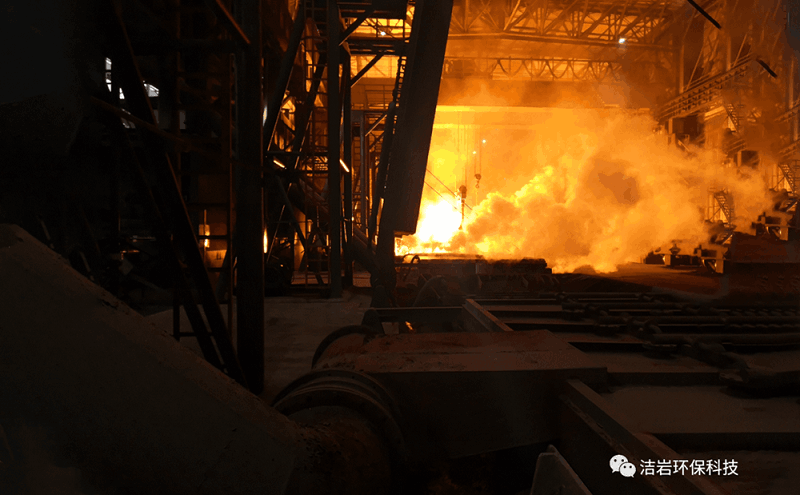
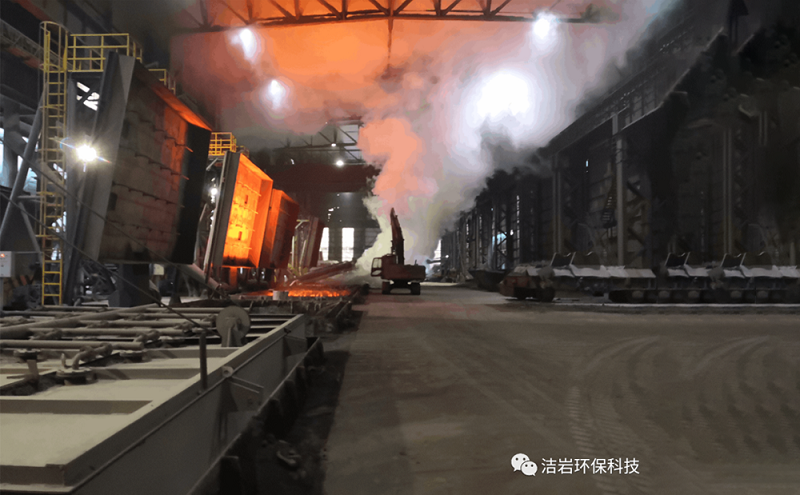
Dust control challenges
◈ Dust collection pipes are prone to clogging.
◈ The dust is highly viscous and prone to agglomeration.
◈ Dust is prone to caking.
◈ The dust has a high moisture content.
◈ Conventional dry powder dust collection methods cannot be used.
The HDC series of high-efficiency centrifugal wet dust collectors are widely used in industries such as mining, metallurgy, building materials, casting, and refractory materials. They are suitable for treating dust-laden gases that are high in temperature and viscosity, with temperatures not exceeding 300°C, and are particularly effective in purifying dust-laden gases that have high dust concentrations and humidity. They also achieve excellent results in purifying dust with a certain level of viscosity and non-hydrophilic dust.
Principle of Dust Collection in High-Efficiency Centrifugal Wet Dust Collectors
When the dust-laden gas enters the dust collector's chamber, it impacts the water surface, causing some of the water to disperse. The airflow then carries the water droplets into a vortex, where the airflow speed within the vortex channel is extremely high. Intense collisions occur between the airflow and the water droplets in the vortex channel, resulting in the wetting and capture of dust particles. Most of the dust is directly filtered out in this process, descending with the water droplets into the bottom of the chamber, where it is collected and discharged from the unit.

Product Advantages
◈ No easily damaged components.
◈ High dust collection rate.
◈ Low maintenance cost.
◈ Suitable for high-temperature, sticky, and high-humidity dust.
◈ Small footprint.
Technical Advantages
◈ Patented pipeline anti-clogging design.
A spray nozzle is installed every 2-3 meters. The water flow, driven by high-speed air, forms a swirling motion inside the pipeline, effectively scrubbing it at high speed. This prevents highly viscous and easily caked dust from forming scaling layers on the inner walls of the pipeline, thereby effectively avoiding dust accumulation in the pipes.
◈ Automatic water level control system.
The system is equipped with automatic water level detection and control. Upon startup, water is automatically added to the unit. During operation, the water level is monitored in real-time; if the water level is insufficient, it will automatically replenish water or reduce the drainage rate. When the unit is shut down for an extended period, the water in the dust collector chamber is automatically drained to prevent sediment buildup and caking.
◈ Smart Management Platform App.
The system is equipped with a smart management platform app, allowing operational data to be carried anytime, anywhere. Users can monitor equipment status and receive alarm notifications on their mobile app or computer at any time and from any location, enabling cloud-based management and control of the equipment.
◈ No wastewater discharge.
The wastewater from the dust collector and the spray water from the pipelines are all discharged into a sedimentation tank. After settling, the water flows into a clean water tank, which then supplies water to the pipeline spray system and the dust collector. The entire system operates as a closed-loop cycle, resulting in zero water consumption.
◈ High-efficiency sedimentation system.
The design features multiple conical hoppers and utilizes static water pressure for sludge discharge. By optimizing sedimentation time, scientifically managing weir flow, and determining the ideal mixing frequency and rate, high-efficiency sedimentation is achieved. This results in clearer recycled water.